
Loading article…
Published August 26, 2025
Universities may lose at least 60% of potential citation revenue when enforcement relies on manual patrols alone.
Parking enforcement has long been a labor-intensive, error-prone process. Officers walk lots with clipboards, manually checking permits and meters while violations happen in spaces they just passed. But automated parking enforcement is changing the game — using cameras, license plate recognition (LPR), and cloud analytics to detect violations as they occur, not hours later during the next patrol round.
This comprehensive guide covers how automated enforcement works, why operators are making the switch, and what to expect when implementing camera-based detection in your lots.
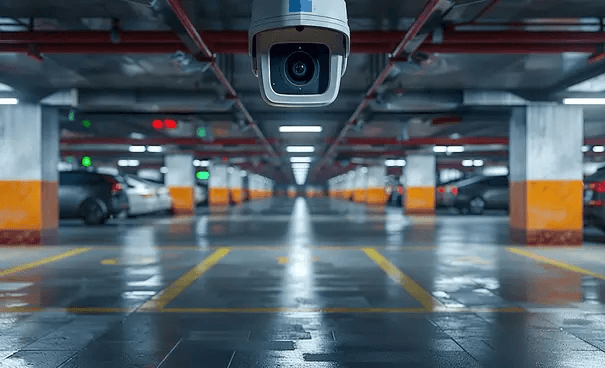
Automated parking enforcement uses camera-based license plate recognition (LPR) and cloud software to monitor parking spaces continuously. Instead of relying on officers to patrol and manually check permits, the system detects violations in real-time and generates citations with timestamped evidence.
Key components include:
The result: operators catch more violations with less labor while providing stronger evidence for dispute resolution.
Traditional clipboard-and-patrol enforcement creates four compounding problems for parking operations:
| Challenge | Manual approach | Automated enforcement |
|---|---|---|
| Detection rate | ~40% of violations caught | ~99% detection accuracy |
| Labor costs | Full patrol shifts required | Up to 75% less enforcement labor |
| Evidence quality | He-said-she-said disputes | Timestamped photos + LPR data |
| Coverage consistency | Patrol windows only | 24/7 monitoring of every space |
Manual patrols operate on fixed schedules — typically 2-3 rounds per day. Violations that occur between patrol windows go undetected, representing significant lost citation revenue. Camera-based systems monitor continuously, capturing expired sessions and unauthorized vehicles as violations happen.
Officers spend hours walking lots to check permits and payment status — time that could be spent on complex enforcement, customer service, or event management. Automated detection frees enforcement teams from repetitive patrol loops.
Without timestamped photos and precise violation data, appeals often become disputes over officer memory versus customer claims. Automated systems provide video evidence, exact timestamps, and plate verification that strengthen citation validity.
The enforcement workflow operates in four stages:
Modern LPR cameras can monitor multiple parking spaces from strategic mounting points — overhead gantries, light poles, or building facades. This approach requires fewer hardware installation points compared to per-space sensors while providing comprehensive lot coverage.
Automated enforcement platforms integrate with permit management, payment processing, and citation systems. This means violation data flows directly into existing workflows without requiring officers to manually cross-reference multiple databases.
Campus parking faces unique challenges: semester permit surges, event parking, student appeals, and mixed-use lots with faculty, staff, and visitor zones.
Typical outcomes:
Office buildings, shopping centers, and mixed-use developments struggle with unauthorized parking, reserved space violations, and tenant complaints about enforcement inconsistency.
Key benefits:
Hospitality properties need flexible guest validation, valet zone management, and seamless arrival experiences without parking stress.
Automation advantages:
Modern LPR systems achieve 99%+ accuracy in optimal conditions and maintain high performance across various lighting, weather, and plate condition scenarios. The technology reads plates in real-time as vehicles move through lots, enabling both enforcement and occupancy tracking.
Violation data, occupancy patterns, and enforcement metrics flow to cloud dashboards where operators can monitor performance, adjust rules, and generate reports. This real-time visibility enables data-driven decisions about staffing, pricing, and lot management.
Officers receive violation alerts on mobile devices with all necessary citation information: plate number, violation type, space location, and photographic evidence. This streamlines the citation process and reduces time spent on paperwork.
Operators typically see citation revenue increases of 3-4x due to higher violation detection rates and consistent coverage. The exact impact depends on current enforcement effectiveness and violation patterns.
Up to 75% reduction in enforcement labor allows operators to reallocate staff to customer service, complex enforcement scenarios, or other operational priorities.
Automated systems provide live operational data for decision-making: occupancy trends, violation patterns, peak demand periods, and enforcement effectiveness by zone.
Modern LPR systems achieve 99%+ accuracy in optimal conditions. Performance varies based on camera placement, lighting, plate condition, and weather, but systems include confidence thresholds and manual review workflows for edge cases.
Operators can fall back to manual enforcement methods during maintenance windows or technical issues. Many systems include offline capability and automatic synchronization when connectivity resumes.
Automated systems provide timestamped photos, plate verification, and violation details that strengthen citation validity. This typically reduces successful appeal rates and streamlines the review process for legitimate disputes.
Yes — cloud-based rule engines support time-based restrictions, zone-specific permits, visitor validation, event parking, and other complex scenarios. Rules can be updated remotely without hardware changes.
Reputable automated enforcement platforms implement encryption, access controls, and data retention policies that comply with privacy regulations. Operators should evaluate security certifications like SOC 2 during vendor selection.
Automated parking enforcement transforms citation-heavy operations from labor-intensive patrols to data-driven, efficient workflows. With camera-based LPR technology, operators achieve higher violation detection rates, reduce enforcement labor, and provide stronger evidence for appeals — all while maintaining consistent coverage across their lots.
The technology has matured beyond early adoption into proven, scalable solutions that integrate with existing parking operations. For operators evaluating enforcement modernization, automated systems offer measurable improvements in revenue, efficiency, and operational visibility.
Ready to explore how automated enforcement could impact your operation? Calculate potential ROI based on your current lot size and enforcement patterns.
Automated parking enforcement uses cameras, license plate recognition (LPR), and cloud-based software to detect parking violations without manual patrols. The system monitors parking spaces continuously, identifies unauthorized vehicles or expired sessions, and generates citations with timestamped evidence.
Check that cameras have clear sight lines to license plates and that LPR confidence thresholds are properly configured in your system settings.
Review parking rule configurations to ensure time limits, grace periods, and permit exceptions match your enforcement policies.