
Loading article…
Published September 23, 2025
88% of travelers say parking stress negatively impacts their overall airport experience — yet most airports still rely on outdated lot management that leaves passengers circling for spots.
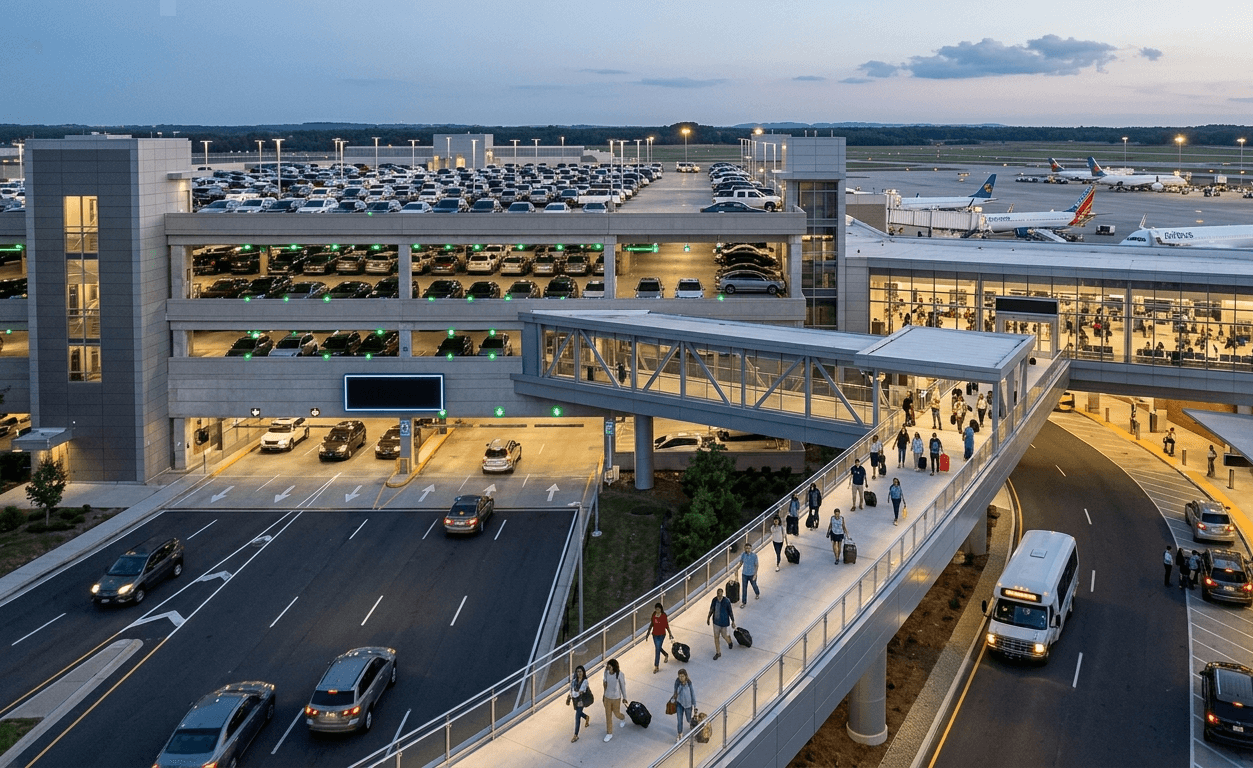
The passenger journey doesn't begin at the gate or even at check-in. For most travelers, the airport experience starts the moment they turn into the parking facility. Every interaction before security — from finding a parking space to navigating terminal entrances — shapes how passengers feel about their entire trip.
Airports that optimize the pre-security experience don't just reduce traveler stress; they boost satisfaction scores, increase loyalty, and create operational efficiencies that benefit everyone from passengers to staff. Here are five proven strategies airports use to transform the arrival experience.
Parking represents the first — and often most frustrating — touchpoint for airport passengers. Without real-time occupancy data, travelers waste precious minutes circling lots, missing flights, and starting their journey stressed.
The traditional approach: Static signs pointing to "Long-Term" or "Short-Term" lots with no indication of availability. Passengers drive from level to level, hoping to find an open space.
The smart parking solution: Real-time wayfinding systems guide passengers directly to available spaces using live occupancy data. Platforms like Spot Parking monitor space-by-space availability and provide turn-by-turn directions through mobile apps, digital signs, and QR codes.
Airports using smart wayfinding report that passengers find parking up to 40% faster compared to traditional lot navigation.
Confusing airport layouts and unclear signage frustrate passengers before they reach check-in. Multi-terminal airports, construction zones, and constantly changing traffic patterns make navigation particularly challenging.
Modern airports invest in:
Curbside chaos ranks among the top passenger complaints at busy airports. Illegal stops, double-parking, and unclear zones create safety hazards and delay legitimate drop-offs.
Automated curbside management helps airports:
| Challenge | Solution |
|---|---|
| Vehicles overstaying time limits | Automated LPR monitoring with graduated enforcement |
| Unclear zone designations | Digital signs with real-time messaging and pricing |
| Commercial vehicle conflicts | Dedicated rideshare and taxi zones with separate timing rules |
| Peak-hour bottlenecks | Dynamic pricing and time-based restrictions |
Airport operations depend on thousands of employees — airline staff, ground crews, retail workers, and contractors — arriving on time for shifts. Poor employee parking creates cascading operational problems.
Common employee parking challenges:
Digital permit solutions address these issues by:
Well-managed employee parking ensures staff arrive on time, reduces operational stress, and prevents overflow into passenger areas during peak periods.
The walk from parking to terminal represents a critical transition in the passenger journey. Airports that invest in passenger comfort during this phase create positive first impressions that carry through the entire travel experience.
Accessibility considerations:
Airports serious about improving the pre-security experience track specific performance indicators:
| Metric | Target | Impact |
|---|---|---|
| Average time to find parking | Under 3 minutes | Reduced passenger stress |
| Lot utilization rates | 85-95% capacity | Revenue optimization |
| Passenger satisfaction scores | 4.0+ (5-point scale) | Loyalty and repeat travel |
| Employee parking violations | Less than 5% monthly | Operational efficiency |
| Curbside dwell time compliance | 90%+ within limits | Traffic flow and safety |
The most successful airport parking programs integrate multiple systems into a unified passenger experience:
Modern platforms like Spot Parking provide end-to-end solutions that scale from single lots to complex multi-terminal operations, with real-time data that supports both passenger experience and operational decision-making.
Airports typically see 15-25% improvements in parking-related satisfaction scores after implementing real-time wayfinding and automated enforcement. The biggest gains come from reducing the time passengers spend searching for spaces.
Most airports see positive ROI within 12-18 months through increased citation revenue, higher lot utilization, and reduced operational labor. Premium airports may achieve payback faster through dynamic pricing optimization.
Advanced systems use occupancy forecasting to predict demand surges during holidays, weather events, and seasonal travel patterns. This allows airports to adjust pricing, open overflow lots, and deploy additional staff proactively.
Yes — modern parking platforms are designed to integrate with flight information systems, terminal management, and passenger communication channels. This creates a seamless experience from curb to gate.
Airport parking systems must meet strict cybersecurity standards and often require additional certifications for integration with airport operations. Look for platforms with SOC 2 compliance and experience in regulated environments.
The passenger experience begins long before travelers reach security checkpoints. Airports that invest in smart parking, clear navigation, streamlined curbside operations, effective employee management, and passenger-friendly amenities create competitive advantages that drive satisfaction, loyalty, and operational efficiency.
As passenger volumes continue growing and expectations rise, the airports that thrive will be those that recognize parking and pre-security operations as strategic differentiators — not just necessary infrastructure.
Ready to transform your airport's arrival experience? Explore Spot Parking's airport solutions to see how integrated parking technology can reduce passenger stress while optimizing your operations.