
Loading article…
Published September 6, 2025
Universities may lose at least 60% of potential citation revenue when enforcement relies on manual patrols and clipboards alone.
It's the start of a new semester, and students are filling campuses nationwide. As classes resume, one familiar challenge returns with them: parking. At large universities, parking lots quickly become congested, compliance drops, and frustration mounts. Students circle endlessly searching for open spaces while administrators struggle to enforce parking rules with limited staff and outdated methods.
The solution isn't building more lots — it's making existing parking smarter. Automated parking enforcement, real-time wayfinding, and data-driven operations are helping campuses improve compliance, reduce congestion, and create a more efficient environment for students and staff alike.
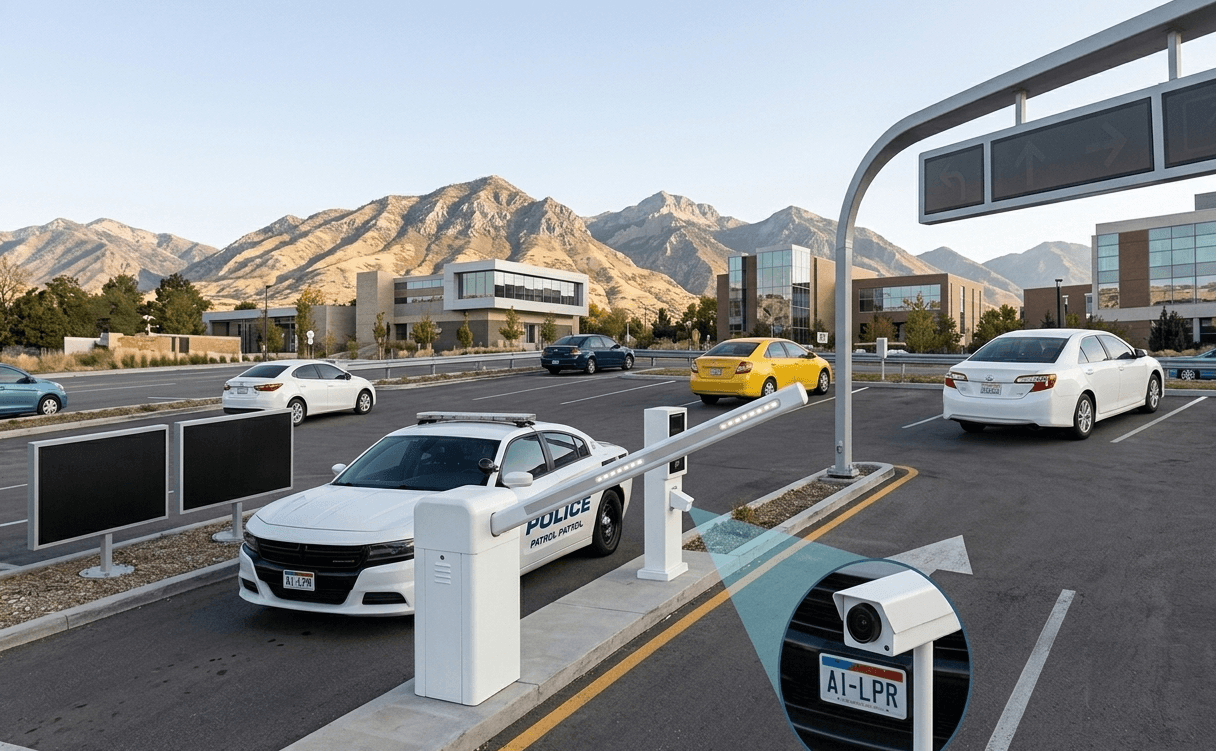
Automated parking enforcement uses license plate recognition (LPR) cameras and AI-powered rule engines to detect violations in real time without manual patrols. Instead of officers walking lots with clipboards, smart cameras monitor every space continuously, identifying expired sessions, unauthorized vehicles, and permit violations as they happen.
Key components include:
Traditional enforcement creates four compounding problems for university operations:
| Challenge | Manual approach | Impact on campus |
|---|---|---|
| Revenue loss | Misses 60%+ of violations | Lost citation income, permit holder frustration |
| Labor costs | Full patrol shifts required | High staffing costs, inconsistent coverage |
| Compliance gaps | Sporadic enforcement | Poor parking behavior, repeat violators |
| Student experience | No real-time guidance | Circling, late arrivals, parking stress |
Manual parking enforcement is labor-intensive and catches fewer than half of actual violations. Officers can only patrol a fraction of campus lots during their shifts, creating enforcement gaps that violators learn to exploit. Without consistent coverage, compliance rates remain low across campus.
Even when spaces are available, outdated signage and lack of real-time data make it seem like no parking exists. Students arrive late to class after circling multiple lots, while staff waste time searching for open spots during peak hours.
Universities lose significant citation revenue when violations go undetected. Meanwhile, permit holders become frustrated when violators occupy their designated spaces without consequences, undermining the value of parking permits and creating ongoing compliance issues.
Modern parking technology addresses these challenges through three integrated capabilities:
License plate recognition cameras automate violation detection by monitoring every space continuously. AI-powered systems evaluate parking rules in real time, flagging expired sessions, unauthorized vehicles, and permit violations instantly. This ensures consistent enforcement across all lots without requiring additional patrol staff.
Citations include timestamped photos and plate data, creating clear evidence for appeals and reducing disputes. The system tracks repeat violators and can escalate enforcement automatically based on violation history.
Mobile apps and digital wayfinding provide students and staff with live parking availability and turn-by-turn directions to open spaces. Interactive maps show which lots have availability, estimated walking times to buildings, and current occupancy levels.
This reduces circling time by up to 40%, improves traffic flow around campus, and helps students arrive on time for classes. Digital signage at lot entrances displays real-time availability, guiding drivers to open areas before they enter congested zones.
Comprehensive dashboards give administrators insights into lot utilization, violation patterns, peak usage times, and revenue trends. This data helps optimize permit allocation, adjust enforcement schedules, and plan capacity for special events.
Occupancy forecasting predicts demand patterns, allowing facilities teams to prepare for semester rushes, graduation, and campus events. Historical data reveals which lots are underutilized and could accommodate additional permits or different pricing structures.
Smart parking systems deliver measurable improvements across multiple dimensions:
Automated enforcement typically increases citation revenue by 4× while improving overall compliance. Consistent coverage discourages violations and ensures permit holders can reliably find spaces in their designated areas.
Universities can reduce enforcement labor costs by up to 75% through automation. Officers focus on complex situations, customer service, and event management rather than routine patrol loops.
Students and staff spend less time searching for parking and arrive less stressed. Real-time guidance reduces congestion around popular buildings and creates a more welcoming campus environment.
Continuous camera monitoring improves lot security and provides evidence for incident investigations. Automated systems can alert security to unauthorized vehicles or suspicious activity in real time.
When evaluating smart parking solutions, campus administrators should assess:
Camera-based systems offer broader coverage with fewer hardware installation points compared to per-space sensors. LPR technology works in various weather conditions and integrates with existing security camera infrastructure.
Look for platforms that connect with student information systems, payment processors, and campus ID card systems. Seamless integration reduces administrative overhead and improves the user experience.
Choose solutions that can grow from pilot lots to campus-wide deployment. The system should accommodate different permit types, visitor parking, event spaces, and changing campus needs over time.
Ensure the vendor provides comprehensive training for parking staff and ongoing technical support. Campus operations teams need confidence in the system during peak periods and special events.
Modern LPR systems achieve 99%+ accuracy in typical campus conditions. AI algorithms continuously improve recognition rates and can handle various plate formats, lighting conditions, and camera angles.
Automated systems provide timestamped photos, plate images, and violation details that create clear evidence for appeals review. This actually reduces successful appeals compared to manual enforcement, where evidence is often limited.
Yes, smart parking platforms allow administrators to quickly adjust rules for events, create temporary permit zones, and modify enforcement schedules through cloud-based management interfaces.
Most universities see rapid adoption through orientation programs, email campaigns, and digital signage promoting the app. The immediate benefit of finding parking faster drives organic user growth.
LPR systems are designed for license plate recognition only and don't store personal images. Data handling follows FERPA guidelines and university privacy policies, with access limited to authorized parking staff.
Parking doesn't have to be the most stressful part of campus life. With automated enforcement, real-time wayfinding, and data-driven operations, universities can solve long-standing parking challenges while creating a safer, more efficient experience for their communities.
Smart parking technology transforms parking from a daily frustration into a seamless campus service that supports academic success and campus life.
Learn more about university parking solutions or explore the ROI calculator to estimate potential outcomes for your campus.